2026 Future of Memory and Storage Conference
The Future of Memory and Storage conference (FMS, previously known as Flash Memory Summit) wrapped up last week. Attendance was noticeably up from the previous year. DRAM and Flash have become hot topics thanks to the explosion of AI inferencing. Many of the keynotes were standing room only. Four of the keynote speakers were former SandForce colleagues, which was really nice to see. This article is by no means a summary of the entire show, but I wanted to share some of my personal highlights.
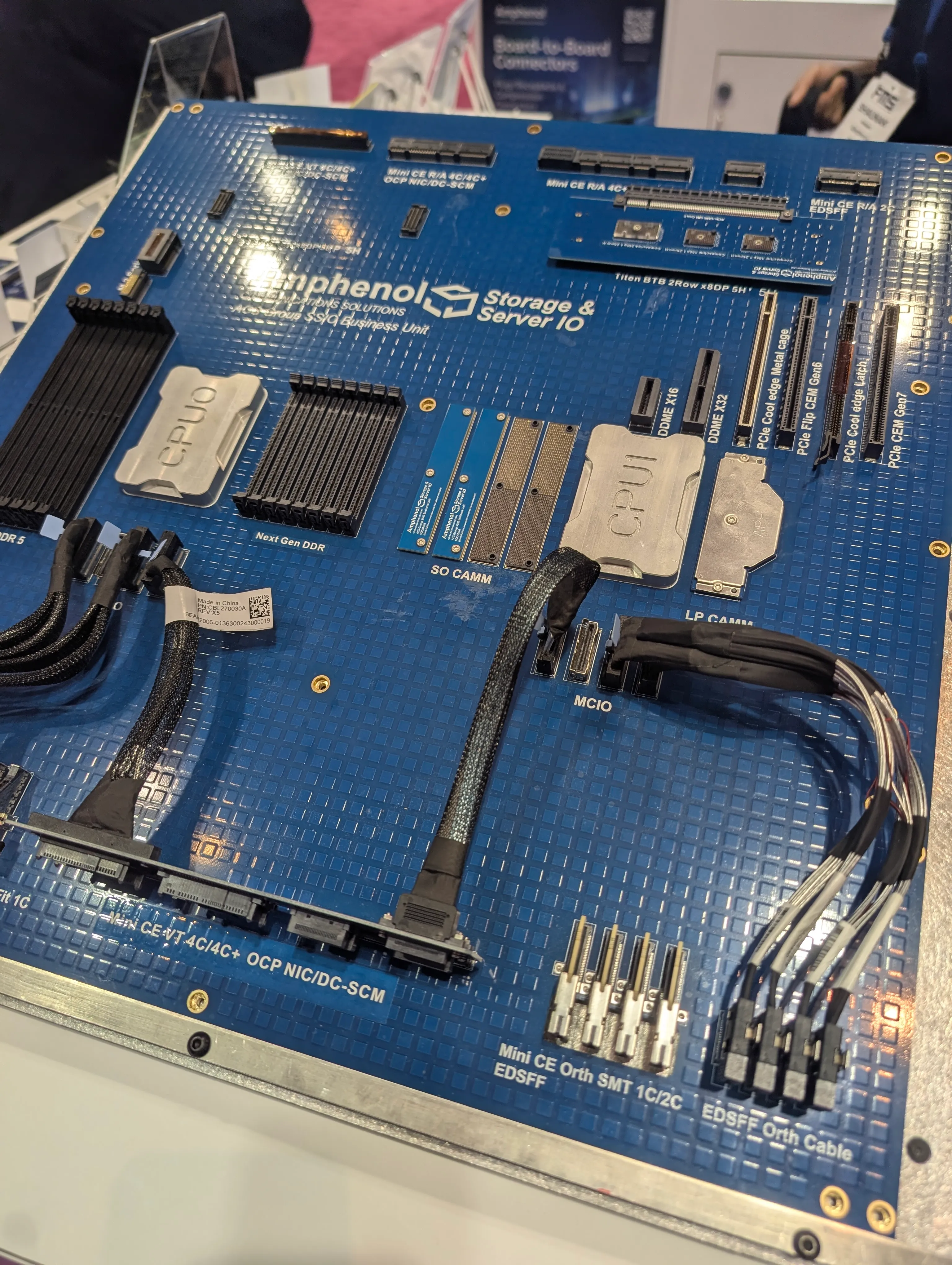
First up, it looks like U.2/SFF-8639 is not dead at Gen6 (ugh). I heard this from multiple test and measurement companies. Speaking of SI challenges, Amphenol was showing an EDSFF two-piece connector solution. They mentioned that this is useful to offset the connector from the PCB for component spacing in some designs. Sacrilegious, ingenious, or maybe a bit of both?
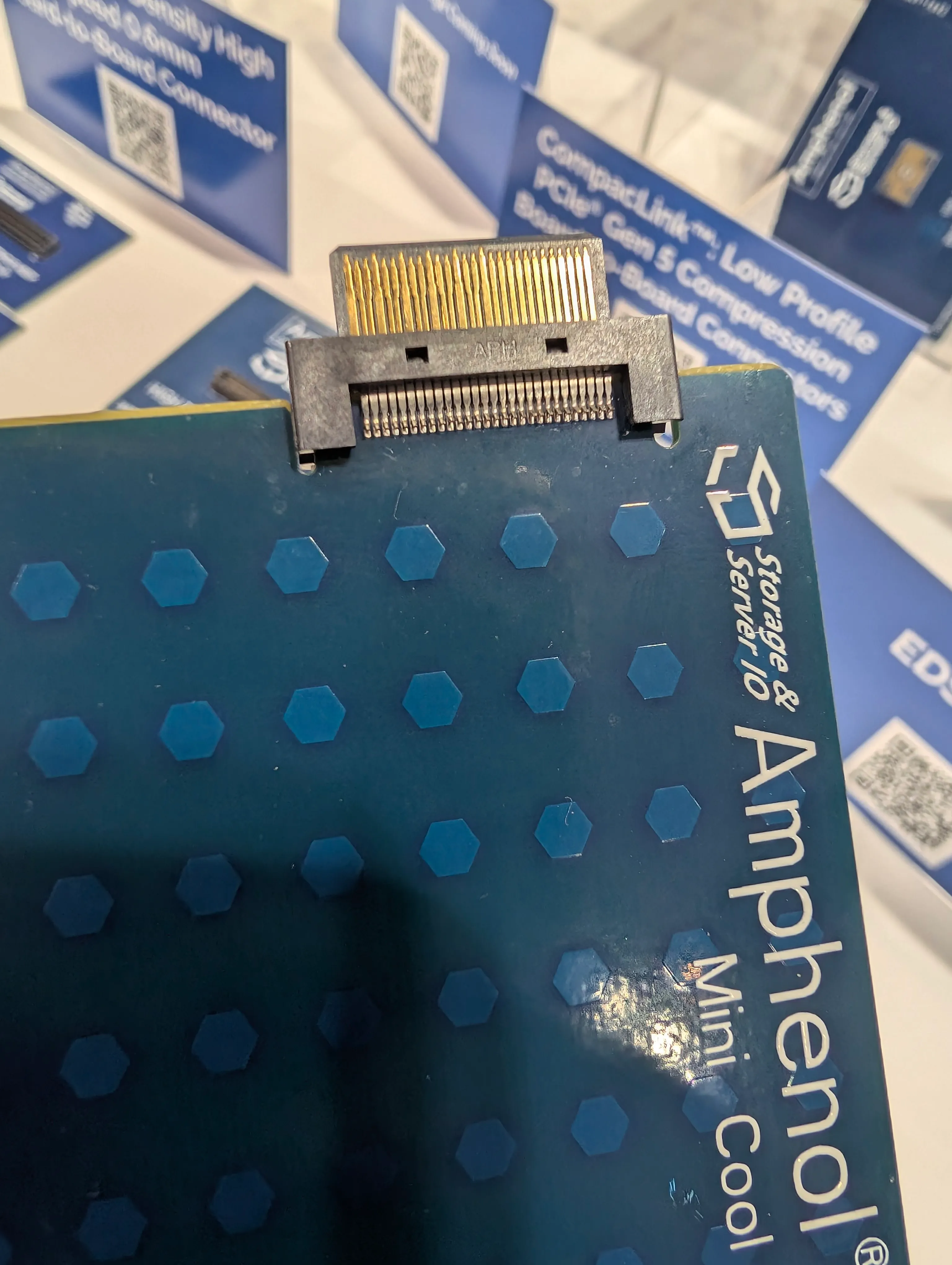
The Amphenol booth staff were awesome. I really enjoy the demo boards they bring:
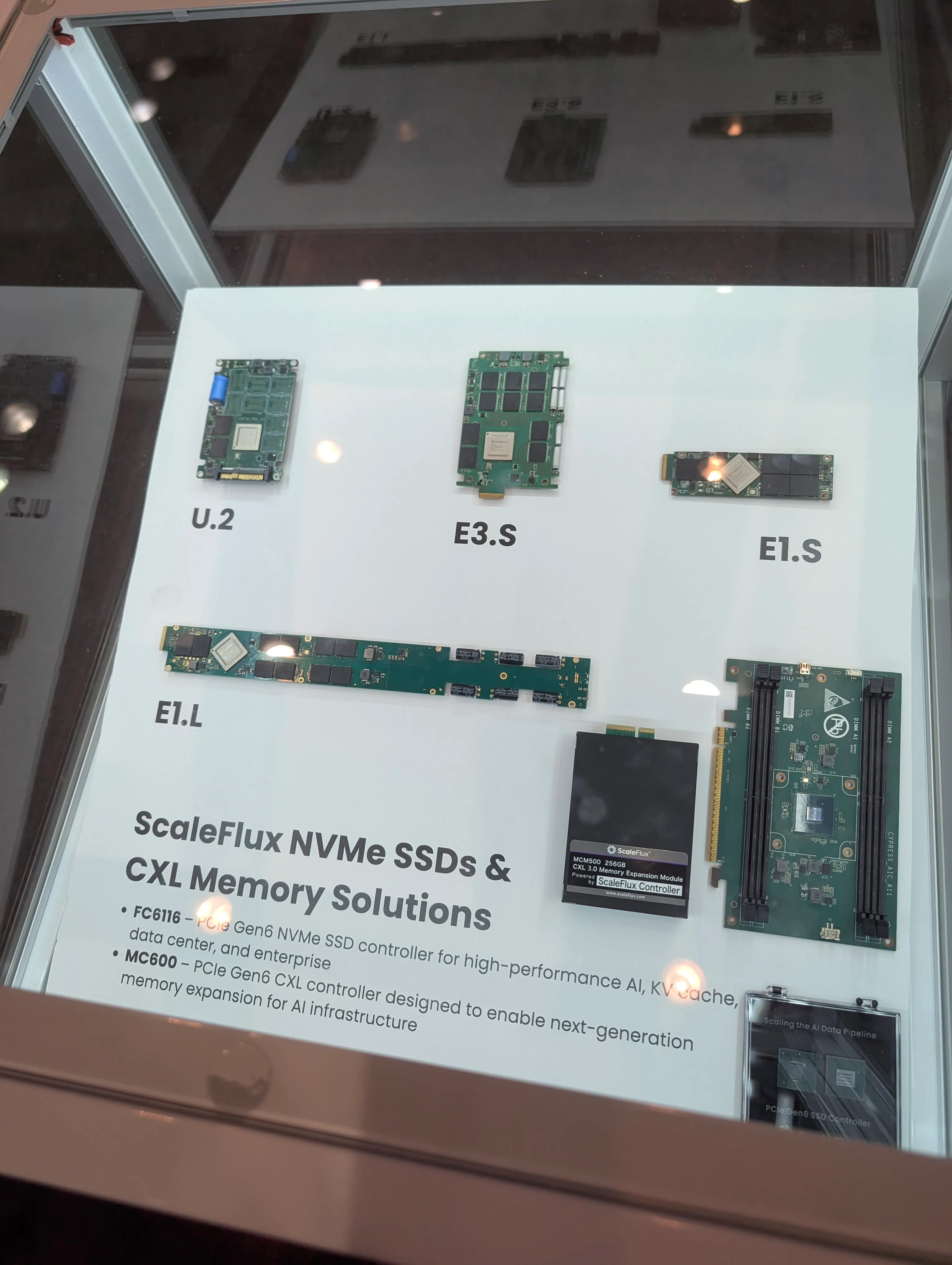
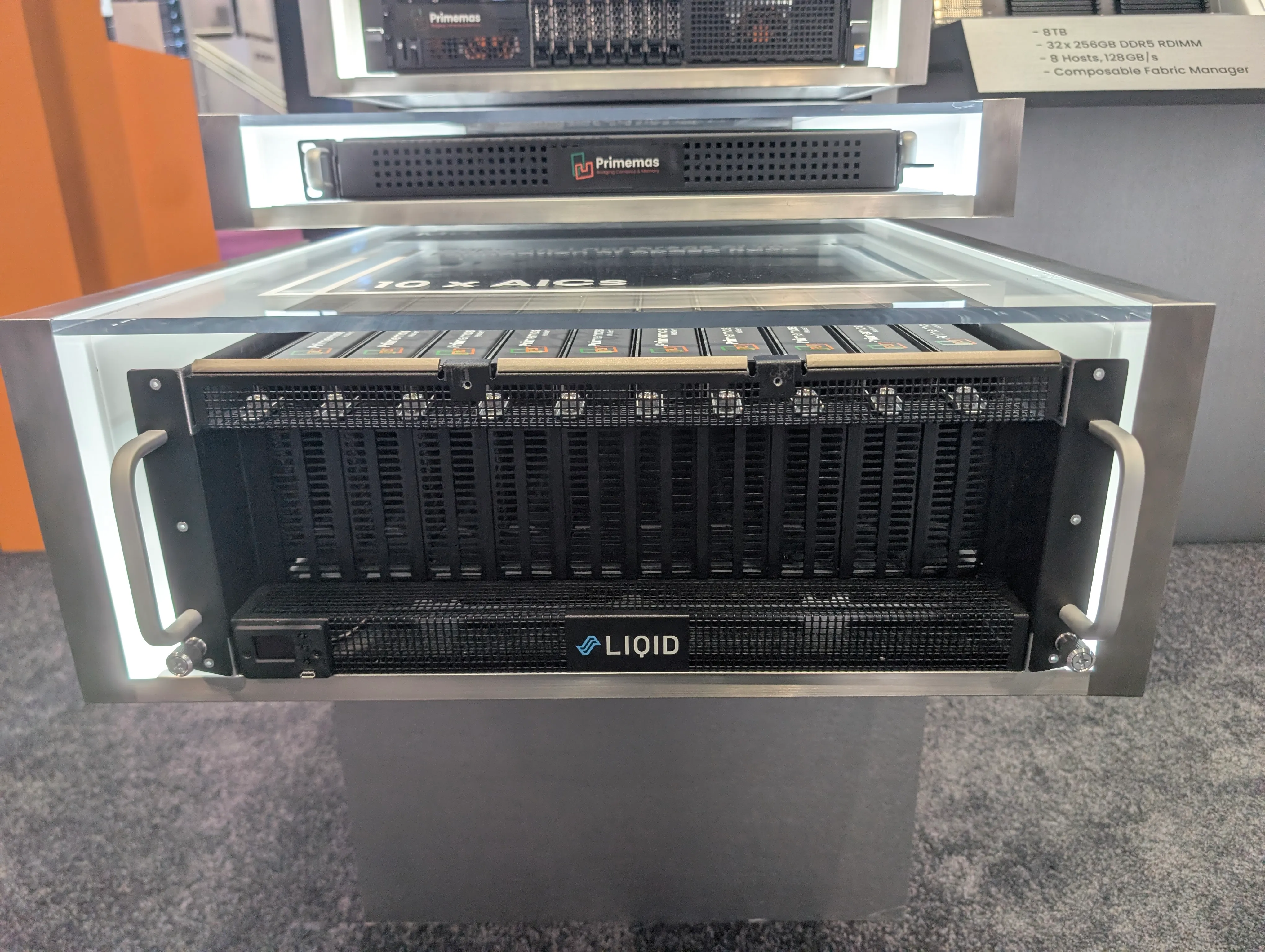
There was quite a bit of CXL at the show. My employer (ScaleFlux) brought our new CXL 3.2 controller. It has a really unique ECC story. The team rediscovered and implemented a long forgotten algorithm (List Decoding) to boost error correction capability. I also met some cool people over at a competitor in this space, Primemas. I’m a big fan of Liqid, so I have to show a picture of their CXL enclosure:
On the NVMe side, two themes dominated: Storage-Next SSDs and Gen6. Storage-Next SSDs offer 25M+ random read IOPS at 512 bytes to accelerate a subset of AI workloads. Traditional SSDs are built around 4kB access granularity, so Storage-Next demands new approaches in controller architecture. There were a lot of interesting sessions on various aspects of Storage-Next designs. For example, how to handle ECC at smaller units of access granularity. There were not a lot of surprises when it comes to mainstream datacenter Gen6 SSDs.
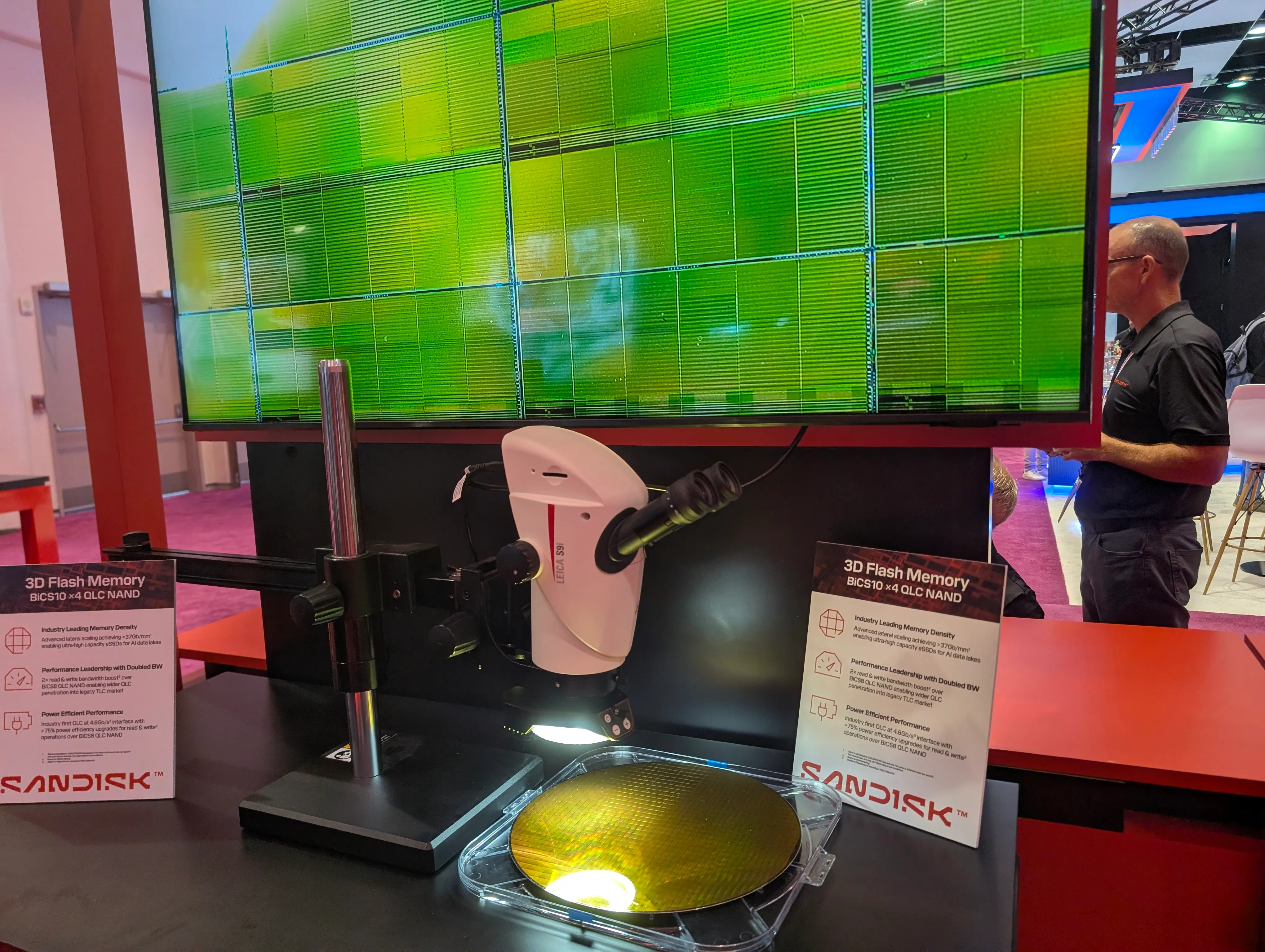
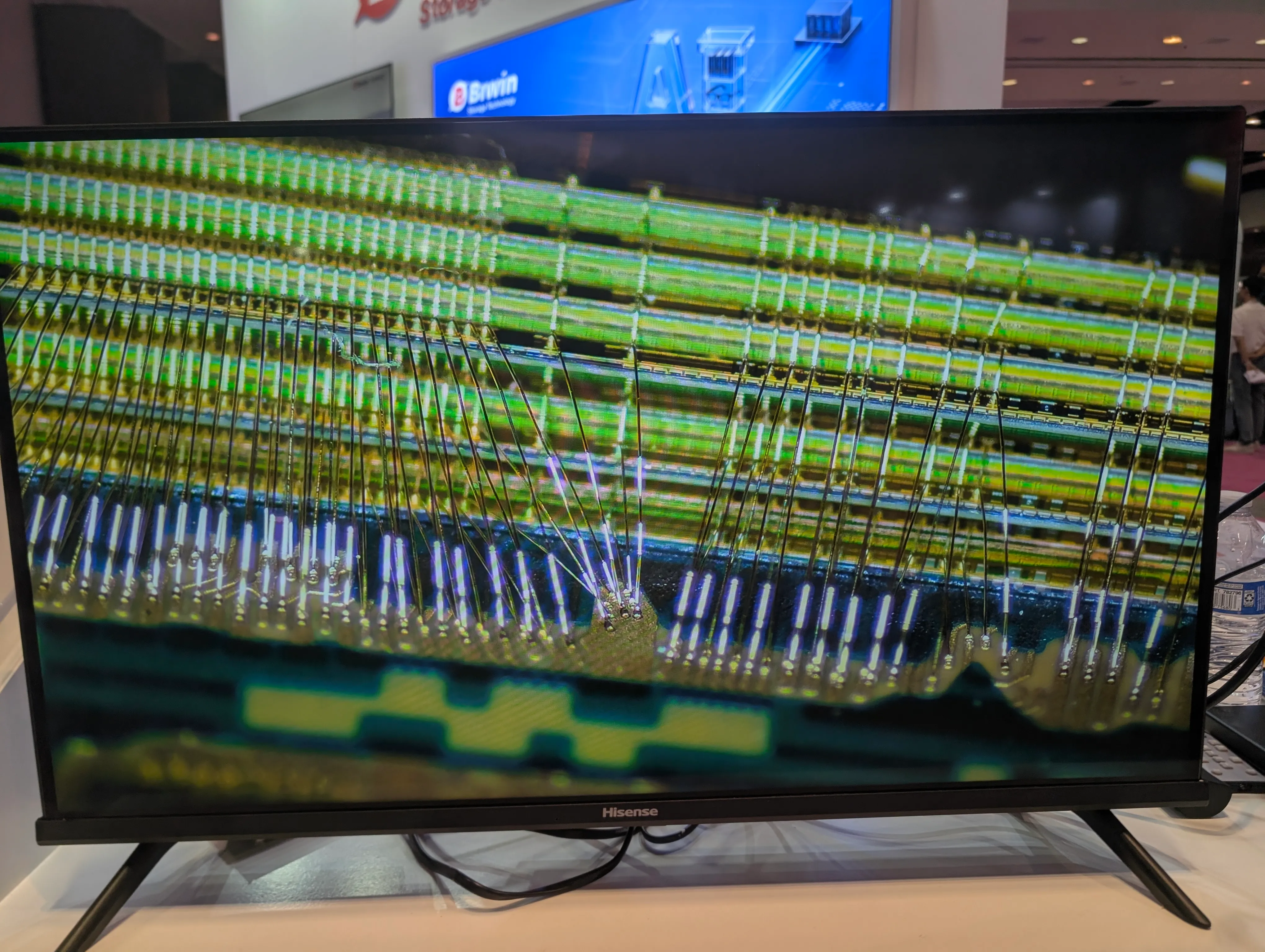
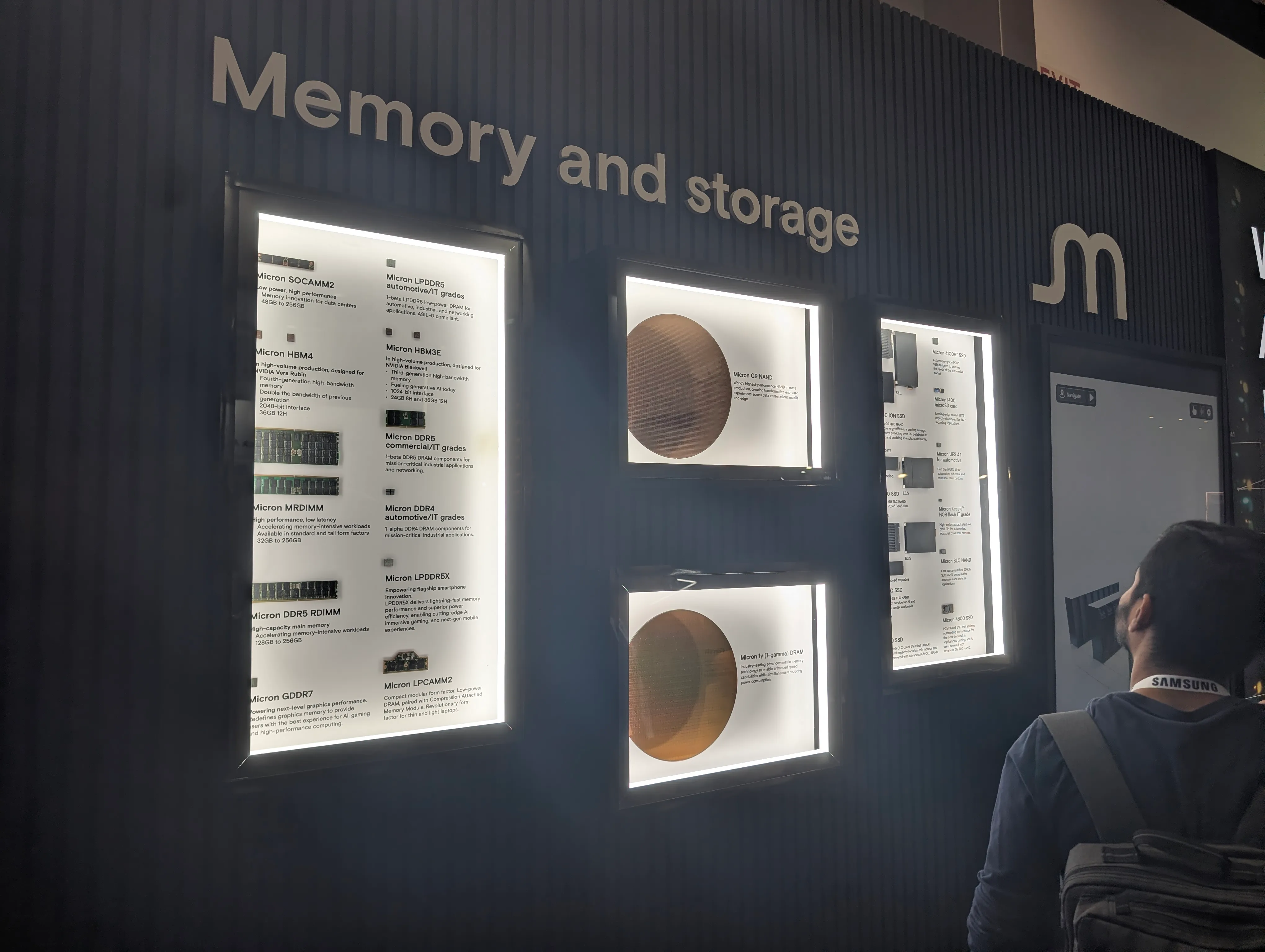
I cannot resist taking pictures of the NAND wafers and wire bonding imaging that has become common at the memory makers’ booths:
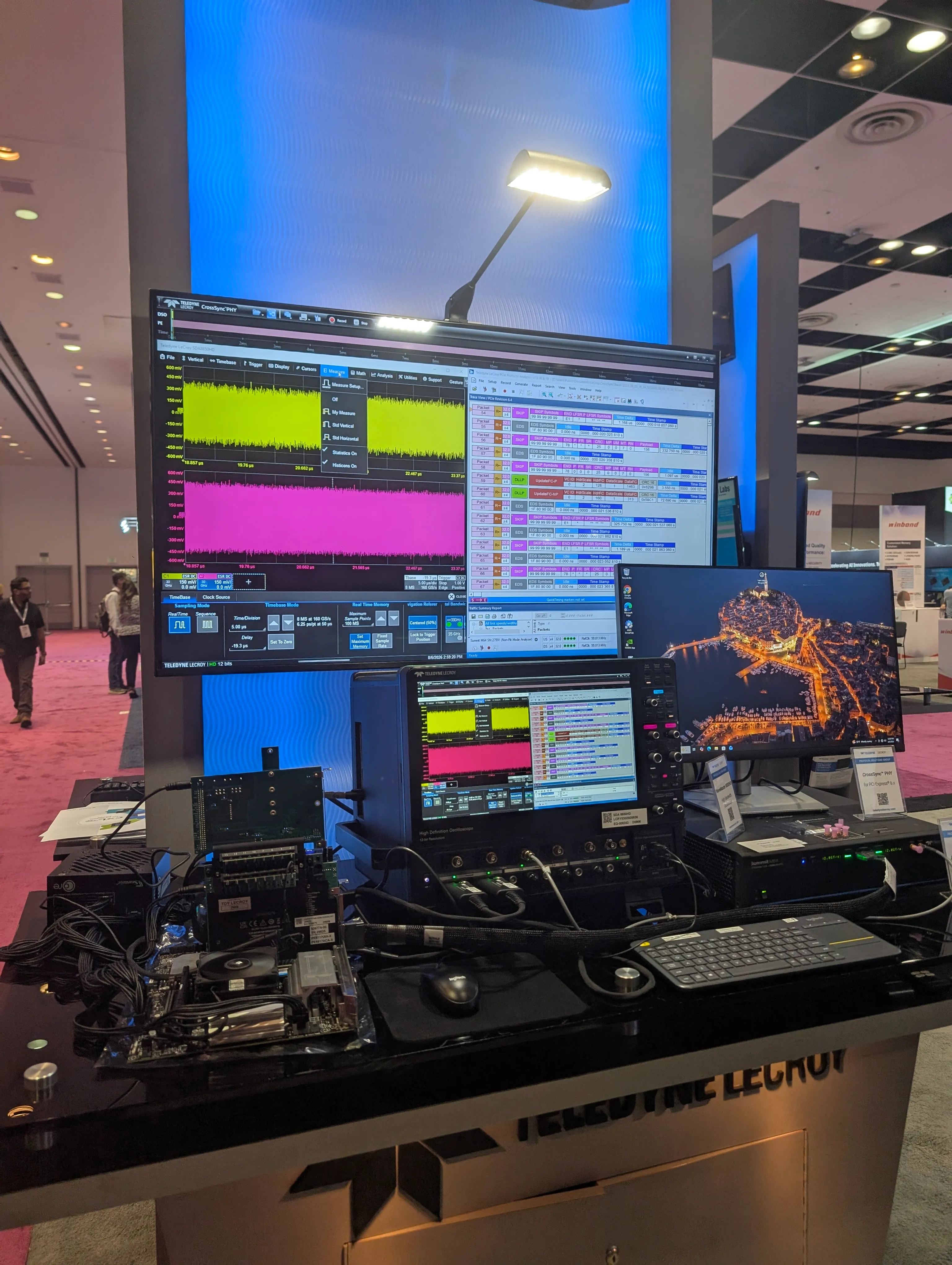
Test equipment keeps getting more expensive with every PCIe generation. I don’t even want to know what this logic and protocol analysis setup from LeCroy costs (but it looks amazing):
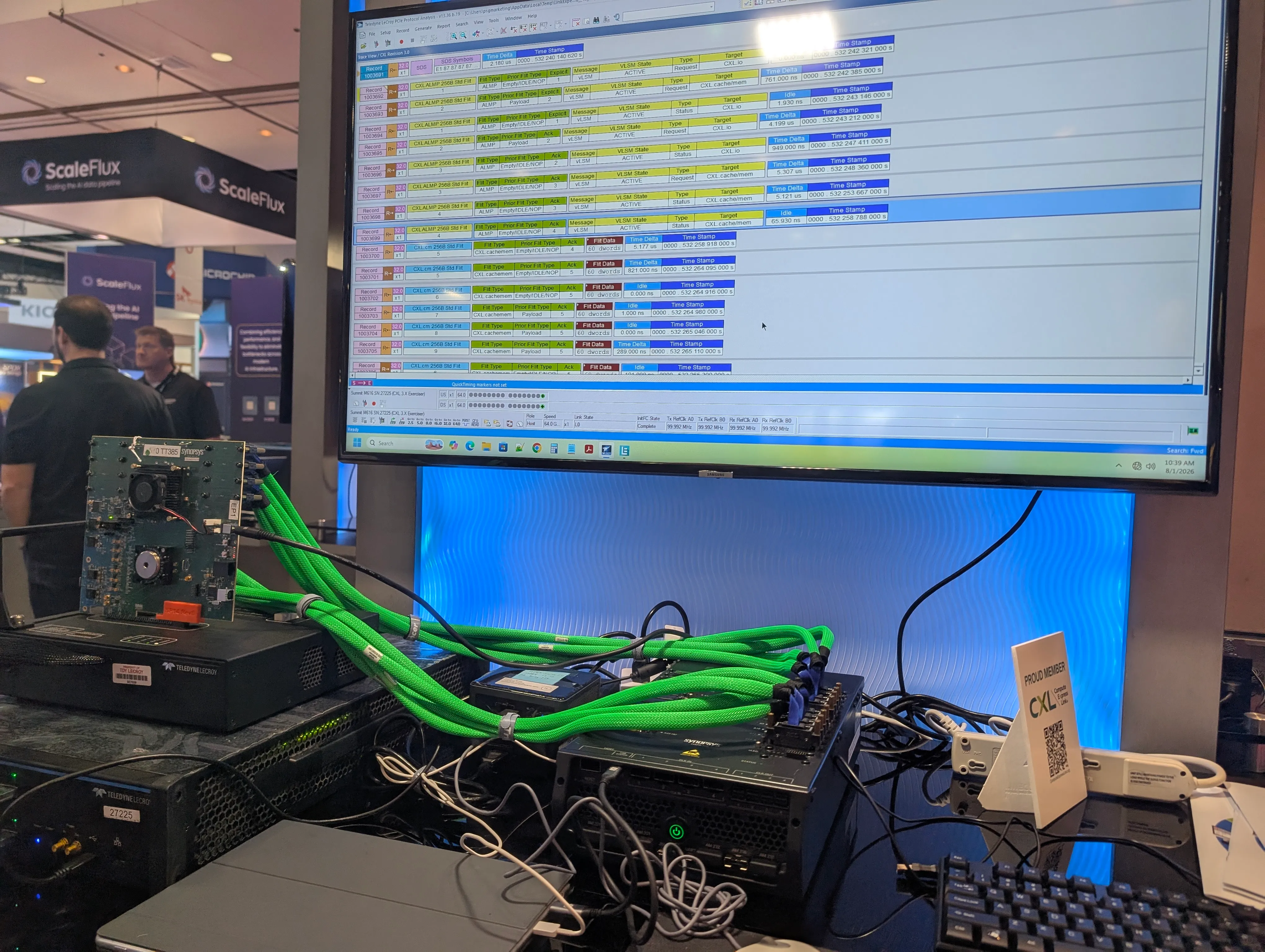
Remarkably, the “CATC trace” packet view hasn’t changed much in 25 years (if it’s not broke, don’t fix it). Here is their CXL protocol analysis setup (our booth is in the background!):
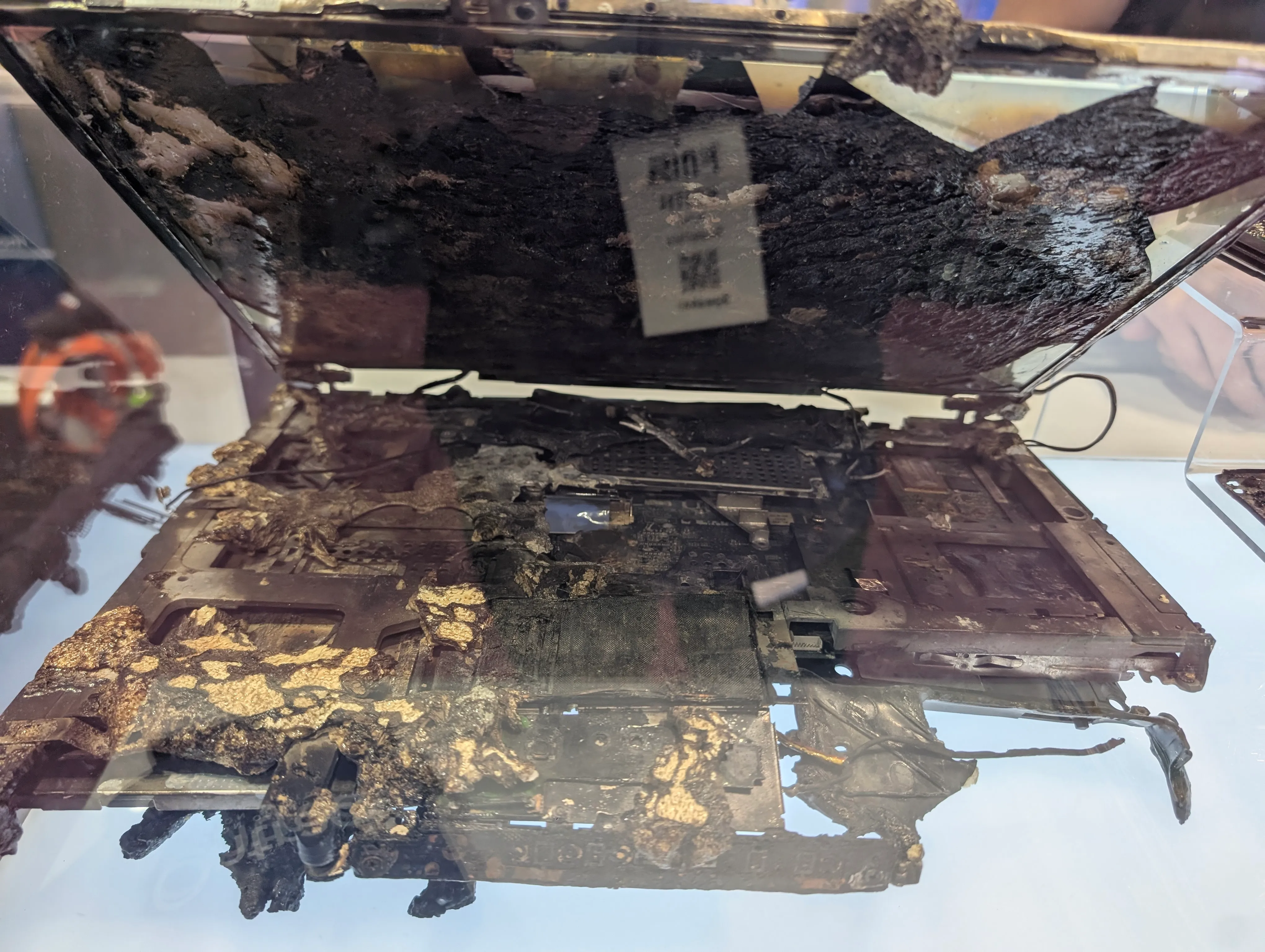
One thing that caught my eye was some destroyed equipment from a data recovery company. They showed a laptop that had been recovered from a plane crash (the data successfully recovered). It was a little eerie.
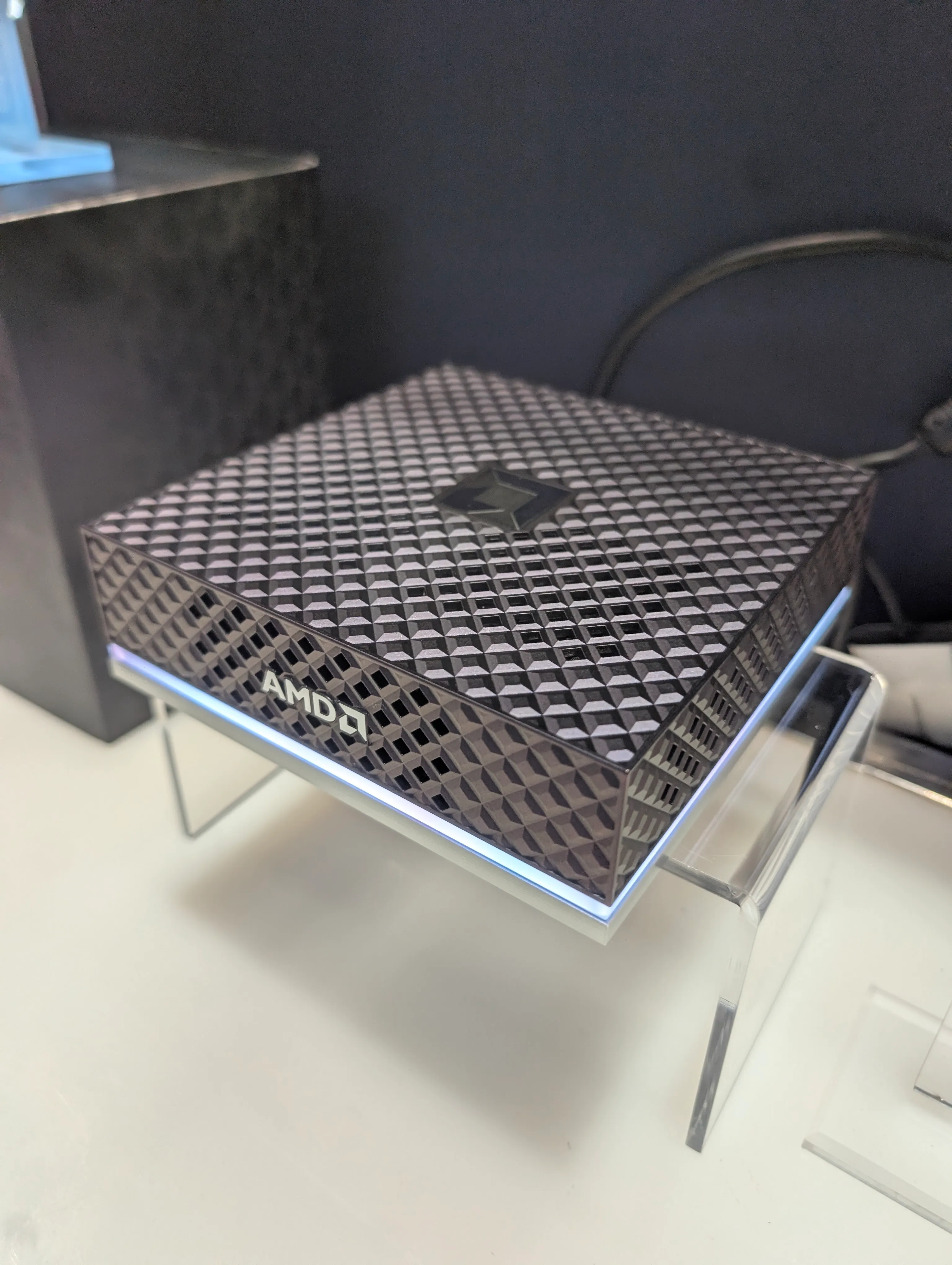
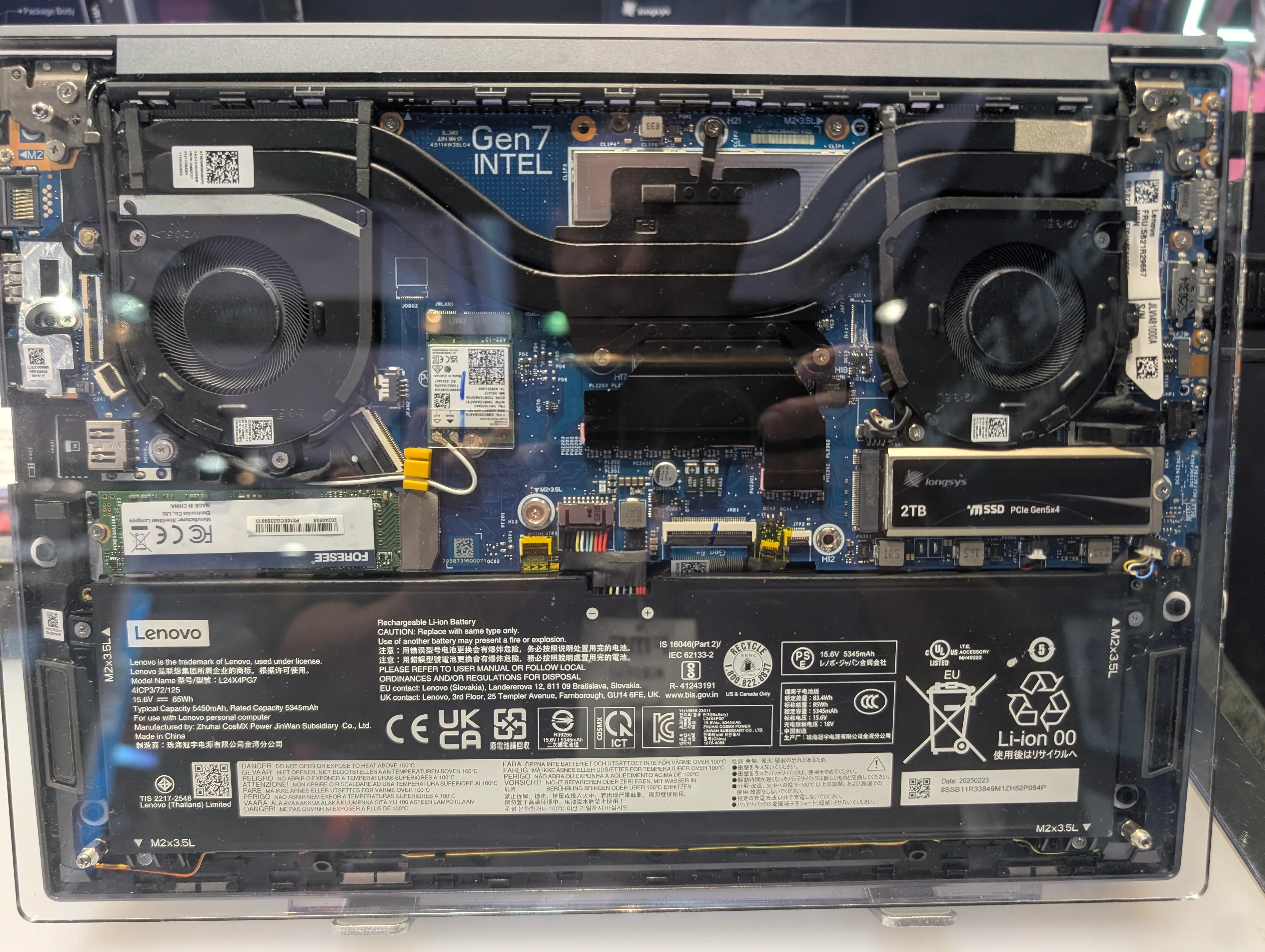
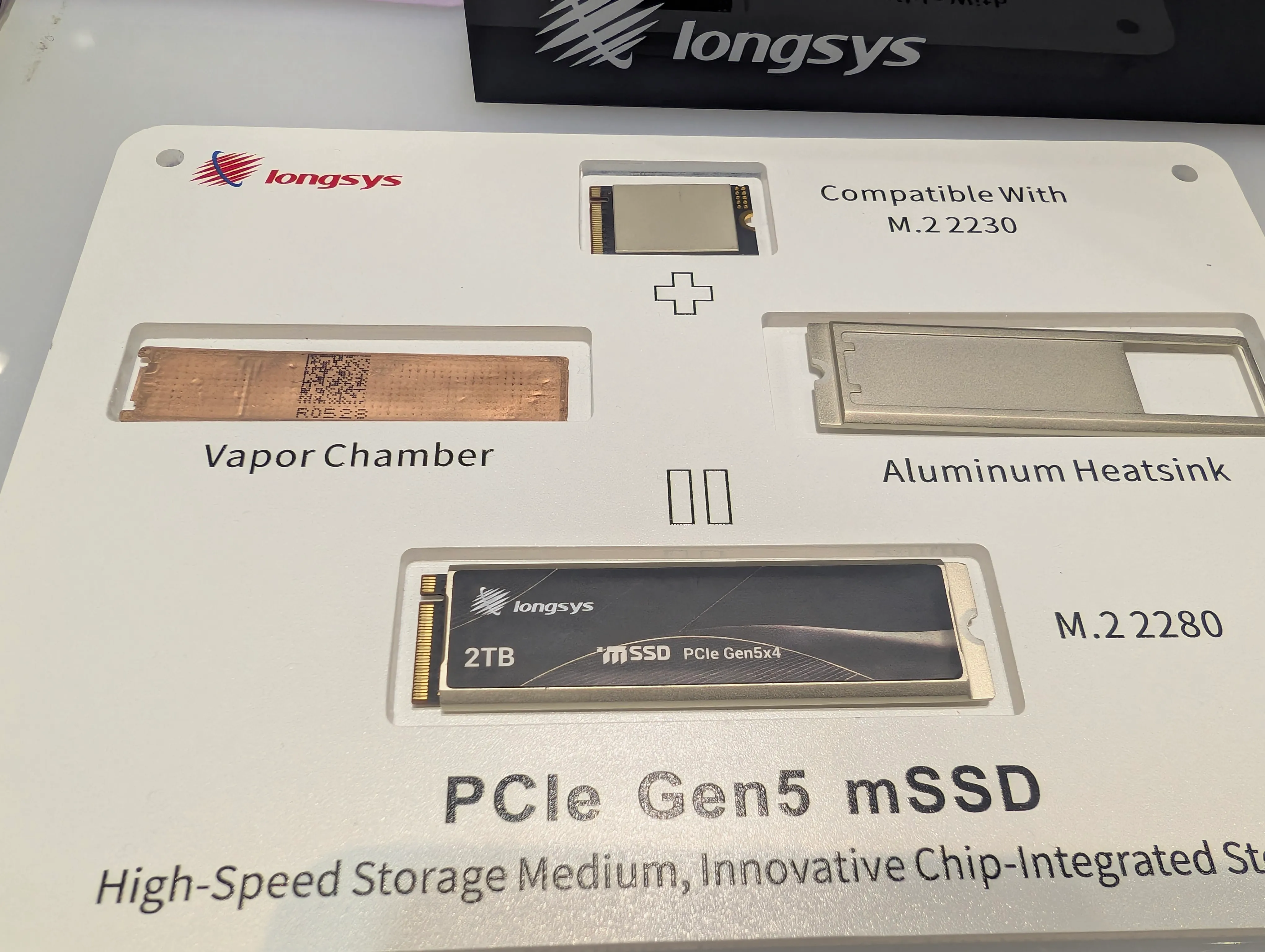
Longsys had an AMD Halo platform on display. It uses their M.2 with a completely sealed enclosure that includes an internal vapor chamber. The box will set you back about 4 grand.
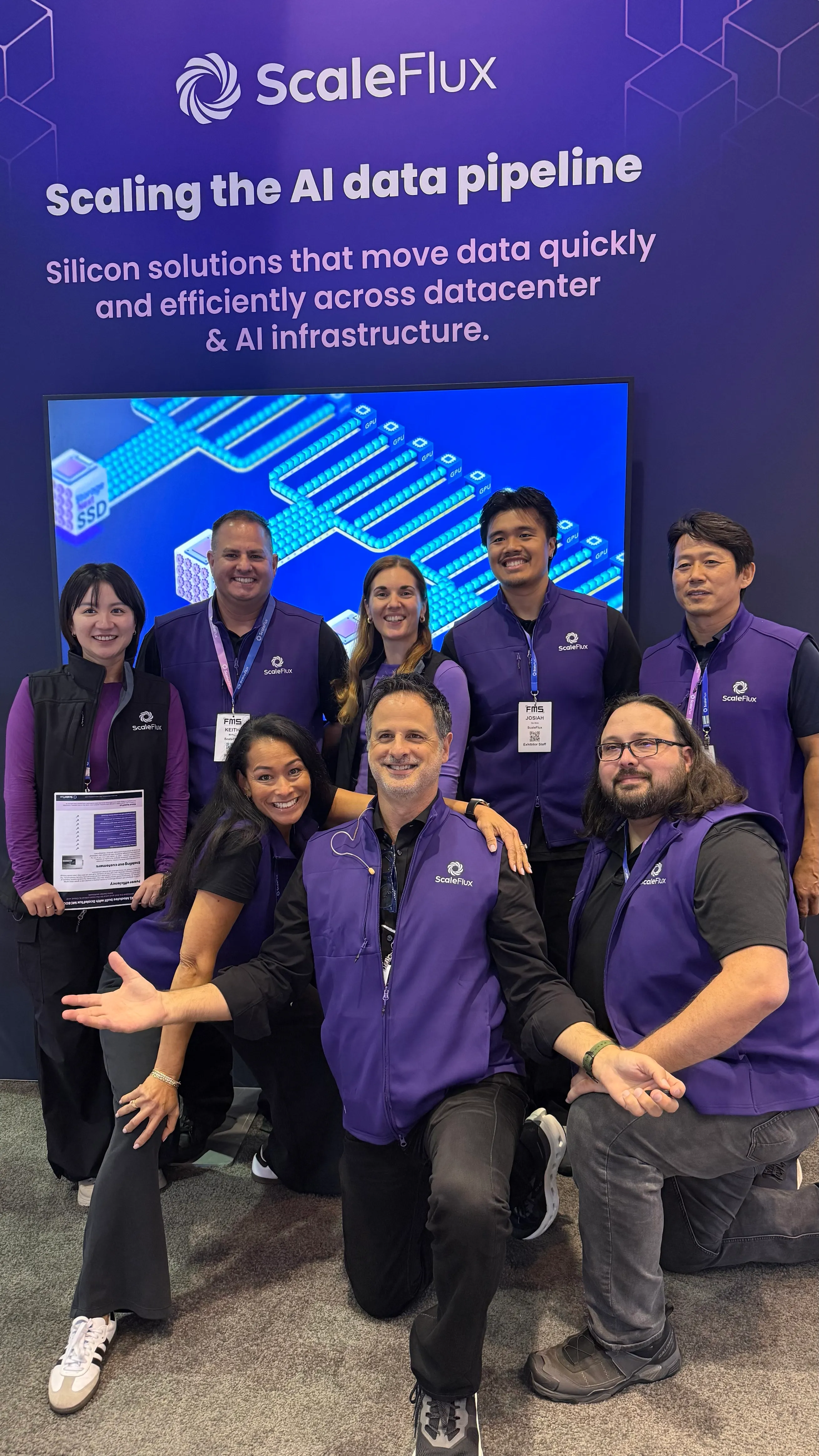
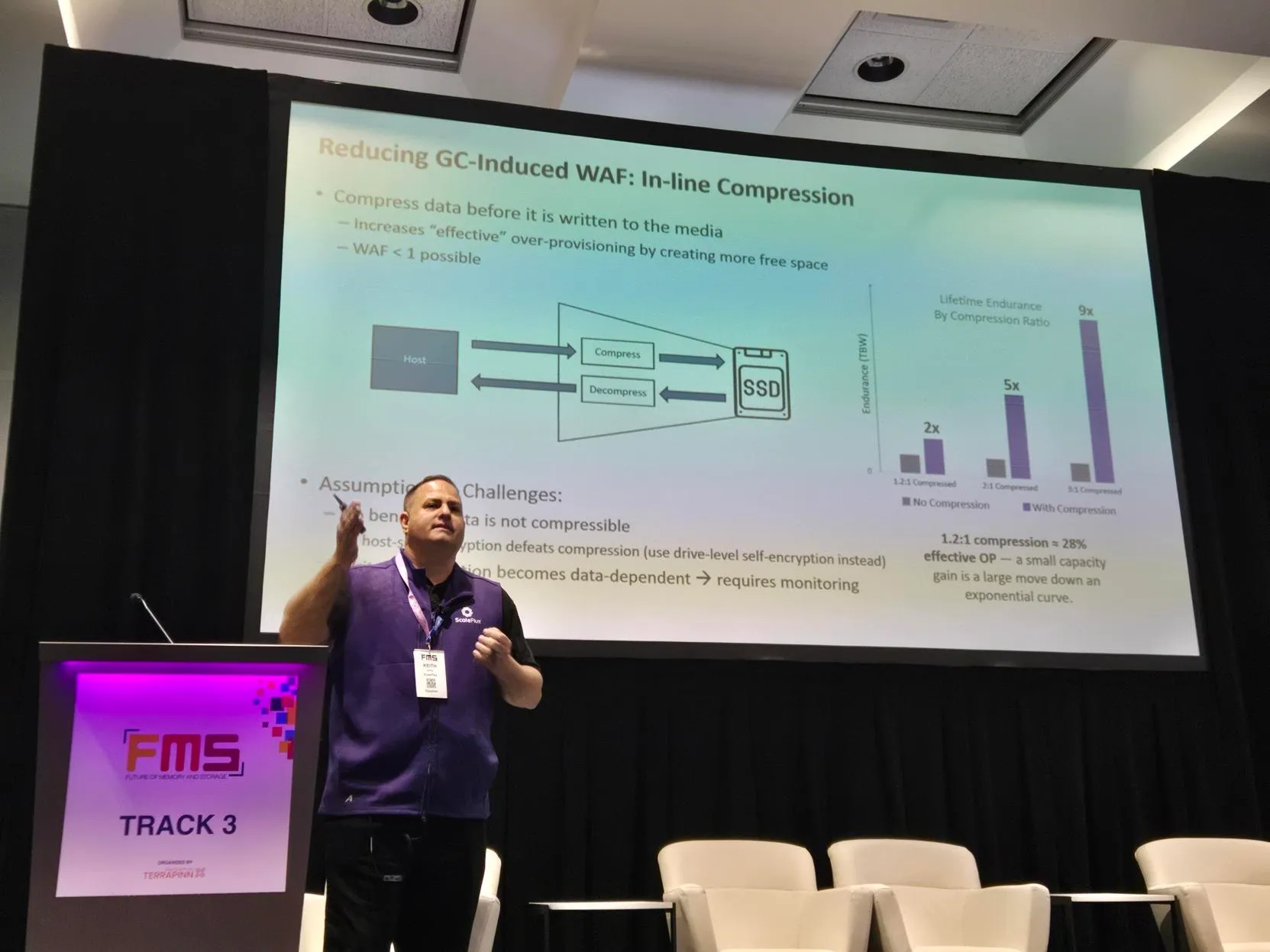
Lastly, here is me with the booth team for our group photo, a picture from my talk on reducing write amplification, and finally the toys we brought to the show.